



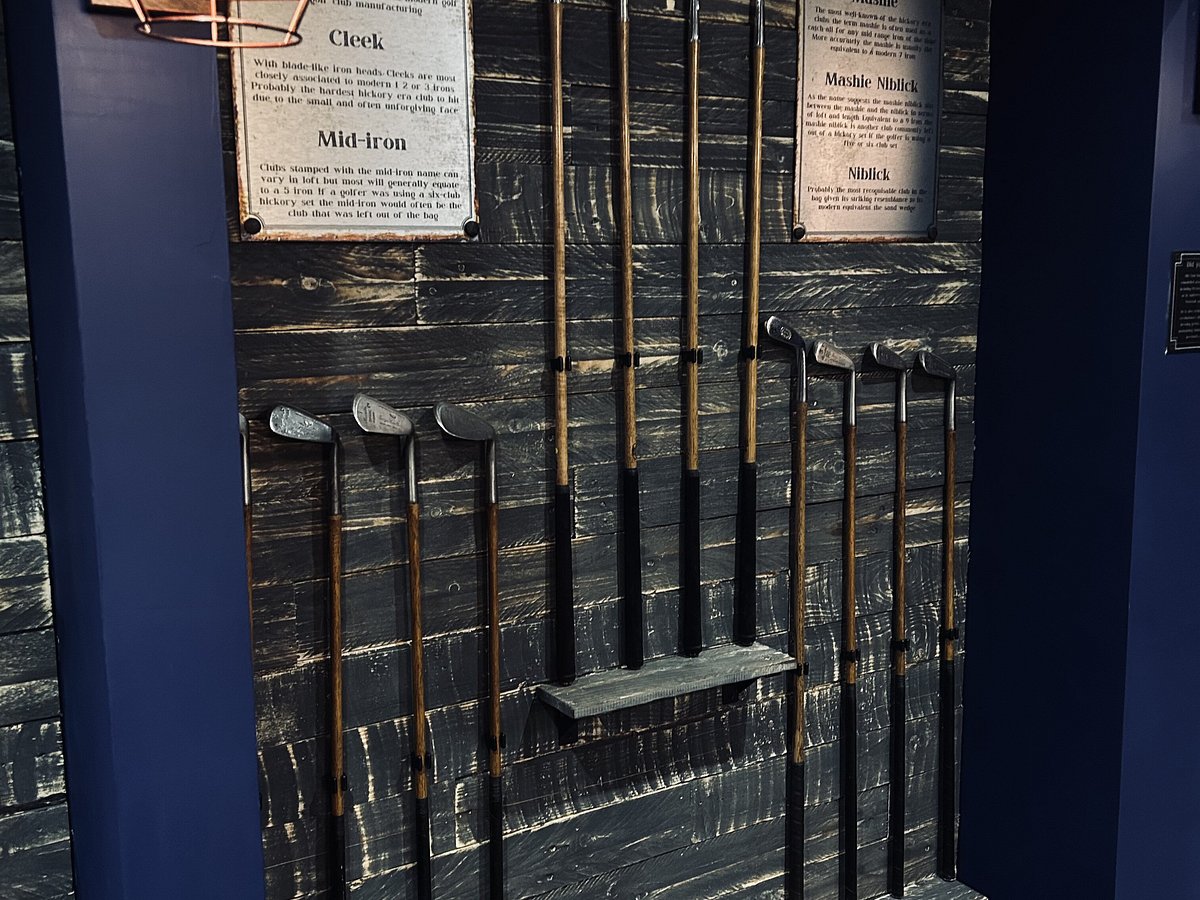
Six miles south of the Old Course, in a workshop that smells of linseed and hickory dust, a clubmaker will hand you a mashie from the 1900s and teach you to pin, whip and grip it yourself. Then you play with it. Scotland's best off-course golf experience, and it says so on the trophy.
Every golfer who comes to St Andrews walks past the history. It is in the museum cases, on the plaques, in the name of every pub. The Hickory Golf Workshop is where you get to pick it up. Twenty minutes' drive south of the town, in the Fife countryside near Largoward, Stu Fraser runs the world's first interactive hickory golf experience: two hours in a working clubmaker's shop, at the end of which you walk out with a genuine club from the hickory era — not a replica, an original, brought back to life by you — and having hit a few balls with it on the way.
It won Best Off the Course Experience at the 2026 Scottish Golf Tourism Awards, and the judges' note is the best description of it: guests could see, hear and smell the craft. That is the thing. Golf in St Andrews is mostly looked at. This is golf you can get under your fingernails.

Why go
Because it is the only place you will do this. Hickory shafts were the material of the game from the 1860s, when Scottish clubmakers began importing the wood from America because it was stronger and more forgiving than ash, until the 1930s, when steel arrived and the trade all but vanished within a decade. The skills went with it. What survives is here, in a workshop connected to the St Andrews Golf Company, the oldest clubmaker in Scotland and the last one still making, and in the hands of a man who is plainly happy to spend two hours passing it on.
And because it works for everyone. You do not need to play golf. Twenty out of twenty reviewers on Tripadvisor gave it five stars, and a good number of them came along as the non-golfing half of a couple and left with the better club. Children are welcome. It is indoors, on one level, and it does not care about the weather, which in Fife counts for something.

What happens
You arrive at the workshop, get a coffee and a safety talk, and are walked through what you are looking at: a hundred-year-old shaft, a forged iron head, and the anatomy of how they fit together. Then the history, briskly, with the clubs in your hands — what hickory is, why it mattered, what a mashie, a niblick and a baffy were for. Then you choose your club from a rack of originals, and the work starts.
The shaft is trued and finished. The head is re-seated on the hosel and the pin driven back through; you will do this yourself, with Stu beside you, and it is the moment the club stops being an antique and becomes a tool again. Then the grip: leather, wound by hand in the tone you choose, and whipped at the neck with thread — traditional black, or something brighter — and finished, if you like, with a flourish of tartan or tweed and your name cut into the shaft. Two hours in, you are holding a club that was made before your grandparents were born and that you rebuilt this afternoon.
Then you use it. There is an indoor putting green and a simulator, and you hit period balls with period clubs, which is harder and slower and more satisfying than it sounds; hickory wants a smooth swing and punishes a modern one. If you have booked the longer session, you also mould a replica gutty ball, the gutta-percha ball that made golf affordable in the 1850s, and take that home too.
"Golf in St Andrews is mostly looked at. This is golf you can get under your fingernails."
The detail people remember
The whipping. Winding the thread around the neck of the club, tight and even, turn after turn, while Stu tells you about the man who probably made it. People go quiet. It is the same fifteen minutes that clubmakers in St Andrews spent a thousand times a year in 1905, and it has not changed.

Who it is for
The golfer on pilgrimage who wants to touch the history rather than read it. The couple where one plays and one does not, since this is one of the few golf experiences the non-player enjoys more. Fathers and sons; grandparents and grandchildren; anyone with a rain day. Golf groups and corporate parties, who book the workshop together and leave with a matching rack of clubs. And anyone who has ever wondered what the game felt like before it became an industry.
It is not a shop visit or a museum; you will be on your feet at a bench for most of two hours, and you will get linseed on your hands. Nor is it in town — it is a twenty-minute drive, so plan a taxi or a car, and pair it with the East Neuk, which is on the same road.
A little history
From 1862, when the first hickory arrived in Scotland from the United States, until steel shafts took over in the 1930s, every club in the world was made the way you will make one here, by hand, mostly in Fife and the Lothians. St Andrews alone had dozens of clubmakers, and their names are the names on the museum cases: Forgan, Morris, Auchterlonie. When the trade collapsed, so did the knowledge. The Hickory Golf Workshop opened to put it back into people's hands — literally — and to give a new generation of hickory players, who are growing in number every year, somewhere to learn what they are holding.

What to do nearby
The East Neuk villages — Crail, Anstruther, Pittenweem — twenty minutes on; fish and chips at Anstruther for lunch.
Kingsbarns Distillery and Balgove Larder, on the road back to St Andrews.
The R&A World Golf Museum in town, to see the clubs you have just learned to make. Read: The R&A World Golf Museum. [when published]
The Old Course, where every club in the workshop was once played. Read: St Andrews Links, more than the home of golf.
Forgan's, the restaurant in the old Forgan clubmaking factory on Market Street — the name on half the clubs in the workshop. Read: Forgan's, St Andrews.
Fit it into the Saturday: Read: A perfect weekend in St Andrews. [when published]
Know before you go
Address: The Hickory Golf Workshop, Teasses Estate, near Largoward, Fife — six miles south of St Andrews. Tel +44 (0)7442 504624.
From the Old Course: Twenty minutes by car or taxi via the B940. No public transport; free parking on site.
Hours / season: By booking, all year. Sessions run to a timetable; book well ahead in summer and around the Open.
Price: Standard two-hour workshop £180 a person, including the restored and personalised hickory club you take home. Gutty ball experience extra. Gift cards available.
How to book: Through the workshop's website; group and corporate bookings by email to info@thehickorygolfworkshop.com.
Good to know: No golf experience needed. All ages; under-16s with an adult. Indoors, on one level; flat shoes. Tea and coffee included. Full refund with 48 hours' notice.
Best time: Any wet day. Or the afternoon before an Old Course tee time, to remind yourself how easy modern clubs are.
Share:
The Kartel Watch Experience, St Andrews: an afternoon in the workshop, and a watch to show for it